



In 2023, I wrote that AI was transforming digital asset management. I got the scale wrong. I was describing a better tagging engine. What’s happening now is a different category, in a market worth more than $6 billion.
That is the promise of autonomous media asset management. It does not mean every decision is handed to a machine. It means the repetitive work of describing, finding and preparing content no longer has to start with a person typing into a form.
Three eras of managing media
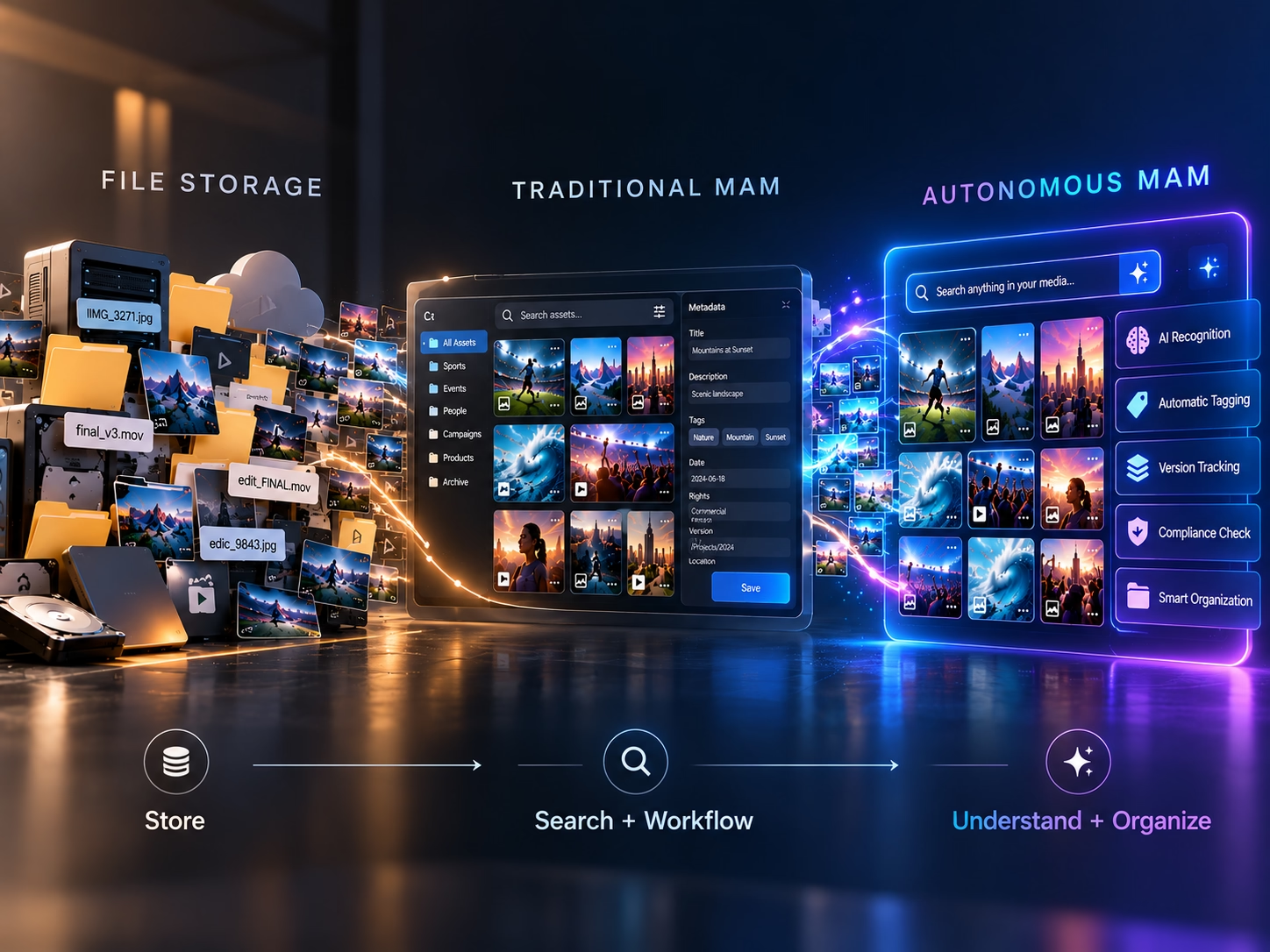
The first era was file storage. A place to put things.
The second was the traditional MAM. Metadata, search and workflows. A real step forward, with one catch: it only works if a human keeps feeding it. Someone has to tag, file and version everything, and when that discipline slips, the library turns to Crud. Some call it a glorified file system. For that era, I’ll concede the point.
The third era is autonomous MAM. An AI teammate that organizes your library on its own.
More than better tagging
In 2023, AI in asset management meant a feature. You ran an algorithm, got tags back, and you were still running the system.
Autonomous means the system runs itself. It recognizes what’s in the content, tags it, files it, tracks versions and flags compliance issues without waiting to be asked. Search works on what’s actually in the media, not on what someone remembered to type. That only works if AI is part of the foundation, not bolted on to a legacy system, which is why we spent years rebuilding Evolphin from the ground up.
Ending the trudge
Every enterprise buyer knows the trudge. Months of migrating content, re-indexing, chasing permissions, fixing formats, untangling duplicates. By go-live the enthusiasm has faded and user adoption never recovers.
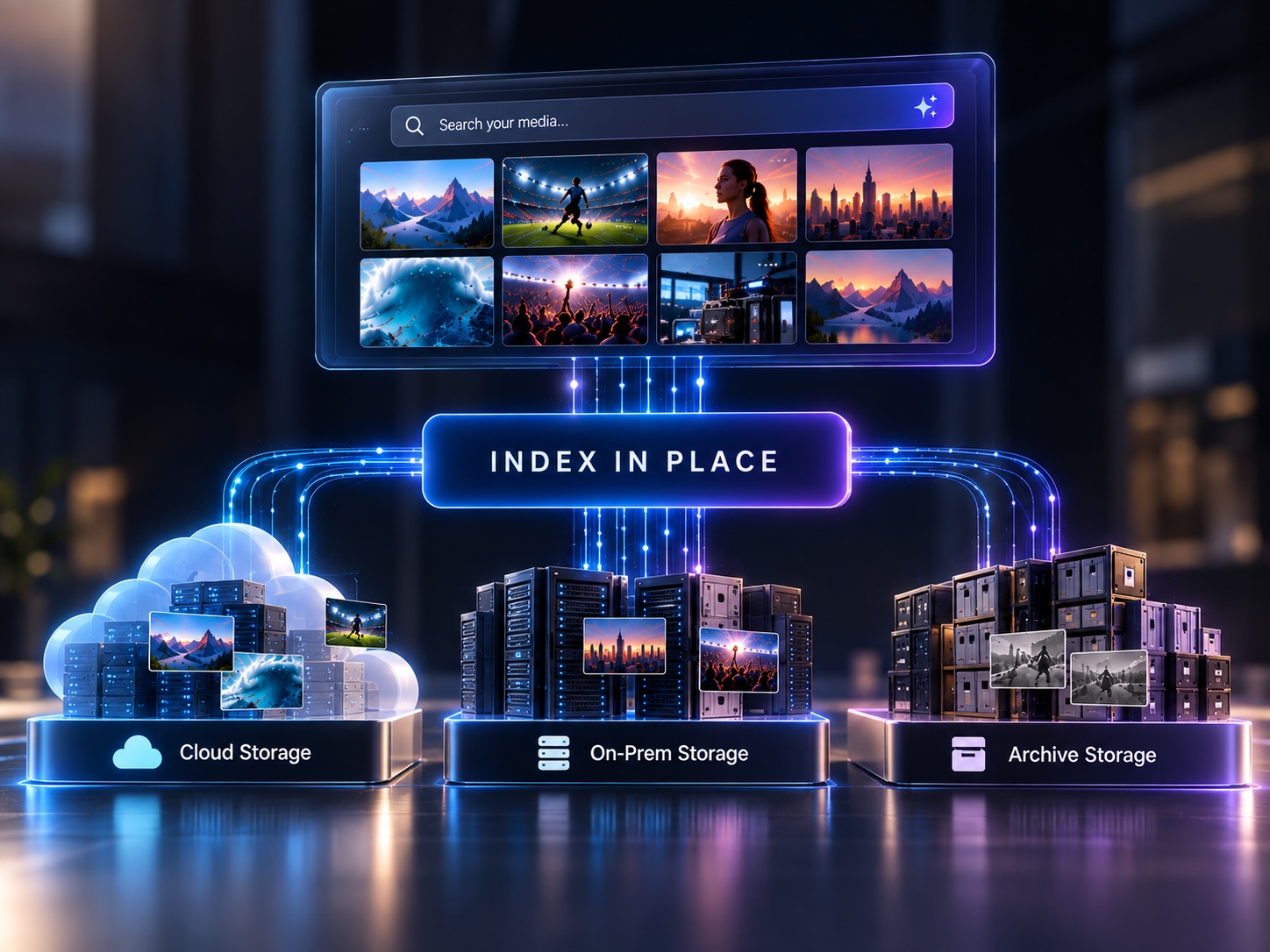
With bring your own storage (BYOS), Index in Place removes the trudge. Your content stays in your own storage, whether that’s cloud object storage or on-prem. Evolphin X indexes it with AI and holds the resulting index in our database. It then watches your storage, so when a file is added, moved or removed, the index follows almost in real time.
The part that matters most is what happens when things change outside the MAM. Plenty of platforms will connect to your storage. Far fewer keep an honest account of what’s drifted since. Evolphin X reconciles its index against your source storage on a schedule, and it reports missing originals, new unindexed files and access problems, so you always know the state of your library. Delete behavior is your call, and bulk AI processing is guarded by choices and cost warnings, so a large scan never turns into a surprise bill.
The AI takes the work, not the job
Tagging, filing and version-chasing are work nobody joined a creative team to do. Take that away and what’s left is judgment, taste, storytelling and relationships. I’ve always believed technology should multiply human connection, not replace it.
A Core you can build on
Evolphin X is built around a Core engine that handles what must be right every time: scalable storage integrity, security and access control, and the AI integration itself. No engine, no car. No Core, no MAM.
Around it sits modules you add when you need them, on your own schedule. You start small, prove the value and grow without a large upfront commitment. Core is open through its API, so your other systems can plug in.
Autonomous doesn’t stop at the library
Organizing media is only half the job. The other half is getting it ready to use.
Crop.photo, the AI image automation platform I also helped found, handles the repetitive work of editing images in bulk, and it integrates with Evolphin X today. Send images out from your library for editing, and the results come back in, versioned and filed, with nobody chasing them. That’s what an open Core makes possible: the AI tools you already rely on become part of your library’s workflow, not a detour from it.

Who it’s for
Evolphin X is built for media-driven organizations that need enterprise control without slowing creative teams down: sports teams and leagues, broadcasters and streamers, and large in-house creative studios where Adobe-native workflow and hybrid infrastructure aren’t optional.
Bring us your hardest search
Every MAM demo looks good on clean sample media. Yours isn’t clean.
Send us the search your current system can’t handle, plus a sample of your messy real-world media. We’ll show you what autonomous search finds without a single hand-typed tag, and we’ll tell you plainly where it can’t.